



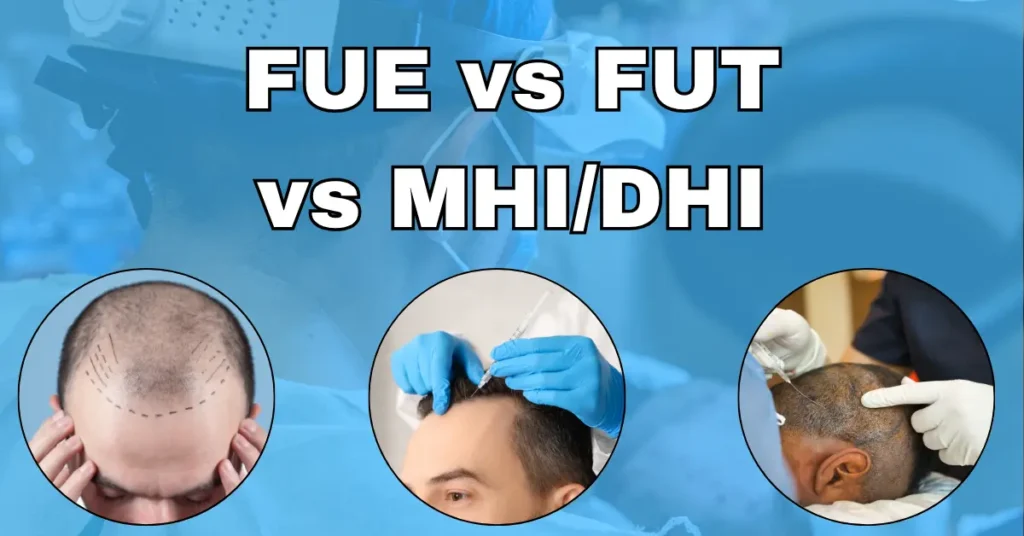
Which hair transplant method is best for you: FUE, FUT, or MHI/DHI? When you’re looking into hair transplants to fix thinning hair, a receding hairline, or bald spots, this is a question that comes up a lot. Depending on your type of hair loss, how you want to recover, and how thick you want your hair to be, each method—FUE, FUT, and MHI & DHI—has its own pros and cons. Follicular Unit Extraction (FUE) leaves very little scarring and heals quickly. Follicular Unit Transplantation (FUT) works well for bigger bald spots. MHI and DHI methods give you precise placement and hairlines that look natural.
Knowing about these kinds of hair transplant methods can help you pick the best one for long-term hair regrowth that looks natural. This guide is especially useful for men and women who are thinking about getting their hair back, comparing different types of hair transplants, or looking for a long-term fix for hair loss. You can make a confident choice that fits your goals, lifestyle, and hair transplant expectations by learning how each method works.
Losing hair can affect your confidence, looks, and even how you feel in social situations without you even knowing it. Many people who lose hair look for a long-term solution to hair loss, whether it’s a receding hairline, a thinning crown, or a patchy beard. That’s when modern hair transplant surgeries come into play.
Hair restoration is more advanced, looks more natural, and is more comfortable than ever before. But it can be hard to choose the right method when there are so many, like FUE hair transplants, Follicular Unit Transplantation FUT, and MHI and DHI methods.
This guide will help you understand everything in simple terms, including the causes of hair loss, the symptoms, the treatments, and how to choose the right approach if you’ve ever wondered which types of hair transplant are best for you.
Let’s go through it step by step.
Why does hair loss happen?
There are many reasons why hair can fall out. Some are short-term, and some are long-term. Knowing what caused your hair loss helps you find the best way to fix it.
What Causes Hair Loss?
• Genetics (Androgenetic Alopecia)
• Changes in hormones
• Stress and things that happen in life
• Not eating well
• Health problems
• Getting older
• Infections of the scalp
• Too much styling or chemical treatments
Androgenetic alopecia is the most common reason for hair loss, especially in men and women who are slowly losing hair. In these situations, hair transplant procedures are often the best way to permanently restore hair.
Signs That You Might Need a Hair Transplant
If you notice any of the following, you might want to think about getting a hair transplant:
• Hairline that is getting thinner
• Crown getting thinner
• Areas of hair loss
• Hairline going back
• Less hair density
• Beard or eyebrows that are patchy
• Hair that doesn’t respond to medicine
If you lose hair permanently, hair restoration surgery can help you grow new hair using your own hair follicle units.
What is a hair transplant?
A hair transplant is a procedure that moves healthy hair follicles from the donor area (usually the back or sides of the scalp) to the recipient area, where hair loss is happening.
The three most common methods for hair transplants are:
• FUE (Follicular Unit Extraction)
• FUT (Follicular Unit Transplantation)
• MHI and DHI Methods (Direct Hair Implantation)
There are pros and cons to each hair transplant method. The best choice for you will depend on the type of hair loss you have, the quality of your hair, and your goals.
Let’s take a look at each one.
Follicular Unit Extraction (FUE) Hair Transplant
Follicular Unit Extraction (FUE) is one of the most common hair transplant methods today.
How FUE works
In FUE hair transplants, individual hair grafts are taken from the donor site and put into areas of the recipient area where hair is thinning or missing.
Advantages of FUE
• No big scar
• Little time off
• Hair that looks natural after being transplanted
• Less pain
• Healing faster
• Great for short haircuts
Who Should Get FUE?
FUE is good for:
• Hair loss that is mild to moderate
• People who like short hair
• People who want as little scarring as possible
• Patients who are younger
Things to Think About
• Procedure time is a little longer
• Needs a skilled surgeon for hair transplants
• For bigger bald spots, you might need more than one session.
Many people recommend FUE hair transplants because they let hair grow back naturally with very little damage.
Follicular Unit Transplantation (FUT) Hair Transplant
Follicular Unit Transplantation (FUT), also known as the strip method, is still one of the most reliable hair transplant surgeries.
How FUT Works
Follicular Unit Transplantation (FUT) is a procedure in which a strip of skin with hair follicles is taken from the donor area. These follicles are divided into hair grafts and put into the area where they will be used.
Advantages of FUT
• Good for big bald spots
• More grafts in one session
• Cost-effective
• Best for more serious types of hair loss
Who is FUT best for?
FUT is a good choice for:
• A lot of hair loss
• Bigger areas for transplants
• People who need the most density
• People who don’t mind a straight scar
Things to think about
• A straight scar at the donor site
• A little longer to heal
• Not great for haircuts that are very short
FUT is still a good way to fix hair loss when you need a lot of coverage, even though new types of hair transplant techniques are available.
Direct Hair Implantation (MHI/DHI Hair Transplant)
The MHI and DHI methods are newer and better versions of FUE hair transplants that are more accurate.
These new hair transplant methods give you more control over where the hair goes and how thick it is.
How MHI/DHI Functions
Follicular Unit Extraction (FUE) removes hair follicles, but a special pen-like tool is used to put them back in place. This lets you get the exact angle, depth, and direction in the area where you want to put it.
Advantages of MHI/DHI
• Very accurate placement
• Design for a natural hairline
• Quicker healing
• Very little bleeding
• More density
Who is MHI/DHI best for?
The MHI and DHI methods are best for:
• Restoring hairlines
• Transplanting eyebrows
• Transplant of a beard
• Hair loss that is small to moderate
• People who want a lot of density
Things to Think About
• Could cost a little more
• Needs transplant surgeons with a lot of experience
• Works best in small areas
MHI and DHI are two of the most advanced hair transplant methods available today.
FUE, FUT, and MHI/DHI: A Quick Comparison
Feature | FUE | FUT | MHI/DHI
Scarring | Minimal | Linear scar | Minimal
Recovery Time | Fast | Moderate | Fastest
Density | Good | High | Very High
Procedure Time | Moderate | Short | Longer
Ideal For: Moderate loss, severe loss, hairline, and precision
Cost: Moderate, Low, or High
There are different types of hair loss, and the best hair transplant method for you will depend on your type of hair loss and what you want.
How to Pick the Best Hair Transplant Method
It depends on the following to choose the right method:
• How bad the hair loss is
• Strength of the donor area
• The type and texture of your hair
• Desired thickness
• Money
• Preference for recovery
This is why it’s important to talk to a hair transplant surgeon who has done a lot of them. A professional evaluation makes sure that the transplanted hair looks natural and lasts the longest.
What Happens After a Hair Transplant
You might notice the following after the hair transplant:
Week One
• A little swelling
• Redness
• Scabbing
• Sensitivity
First Month
• Shedding temporarily (normal process)
• The healing process goes on
Three to six months
• Hair starts to grow again
• The density gets better over time
9 to 12 Months
• Results are clear
• Hair grows back naturally
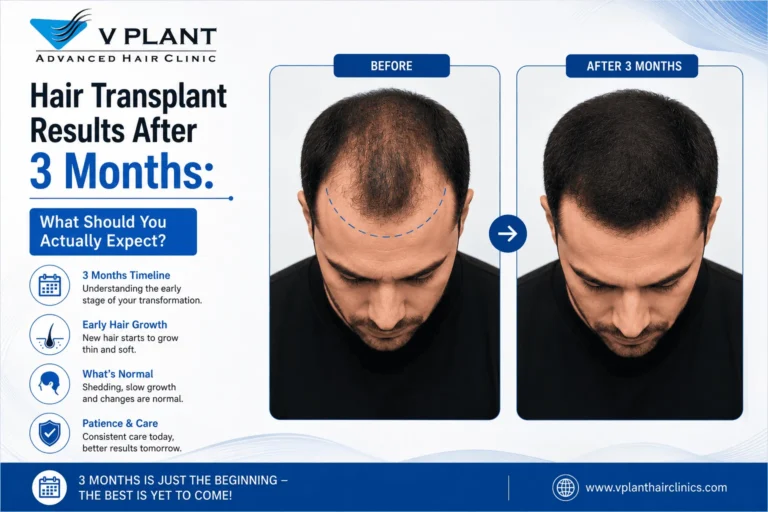
Knowing what to expect from a hair transplant can help you feel less anxious and make the whole process go more smoothly.
Is a hair transplant forever?
Yes. The hair that is transplanted comes from the permanent donor area, so it keeps growing naturally.
But for long-term hair regrowth, it’s important to keep your hair healthy overall.
How to Get Better Results
• Take care of yourself after the procedure
• Eat a healthy diet
• Don’t smoke
• Lower your stress
• Use hair products that are gentle
These steps help keep new hair growing and get results that last.
It’s important to choose the right clinic.
A lot of things affect how well a hair transplant works:
• How long the hair transplant surgeon has been doing this
• The technology used
• Choosing a method
• Good planning
It’s important to choose a clinic you can trust if you’re thinking about getting a hair transplant.
A lot of people in Mumbai go to Dr. Amit Agarkar at VPlant Hair Clinic for personalized hair restoration and results that look natural. The clinic is known for using advanced hair transplant methods like FUE, Follicular Unit Transplantation FUT, and MHI & DHI to make hairlines look natural and last a long time.
Patients often like how open the clinic is, how thorough the consultation is, and how comfortable the hair transplant is. Expert help can make a big difference if you’re dealing with early thinning or advanced bald spots.
Last Thoughts: Which Method is Best?
There is no one “best” type of hair transplant.
• Choose FUE if you want to heal faster and have less scarring.
• Pick FUT if you need the most coverage
• If you want accuracy and high density, use the MHI and DHI methods.
What works best for hair loss depends on what kind of hair loss you have and what you want.
If you’re not sure which option is best for you, the best thing to do is talk to experienced transplant surgeons.
Are you ready to get your hair back?
You don’t have to let hair loss affect your confidence. Modern hair restoration methods can make it possible for hair to grow back naturally and permanently.
If you’re thinking about getting a hair transplant, you should talk to Dr. Amit Agarkar at VPlant Hair Clinic in Mumbai. He can help you figure out which type of hair transplant is best for you.
A simple consultation could be the first step toward new hair growth and a boost in confidence.
Sometimes, the best way to deal with hair loss isn’t just to get your hair back; it’s to feel like yourself again.